MCP Goes Stateless: No Handshake, No Sticky Sessions, Better AI Gateways
TL;DR
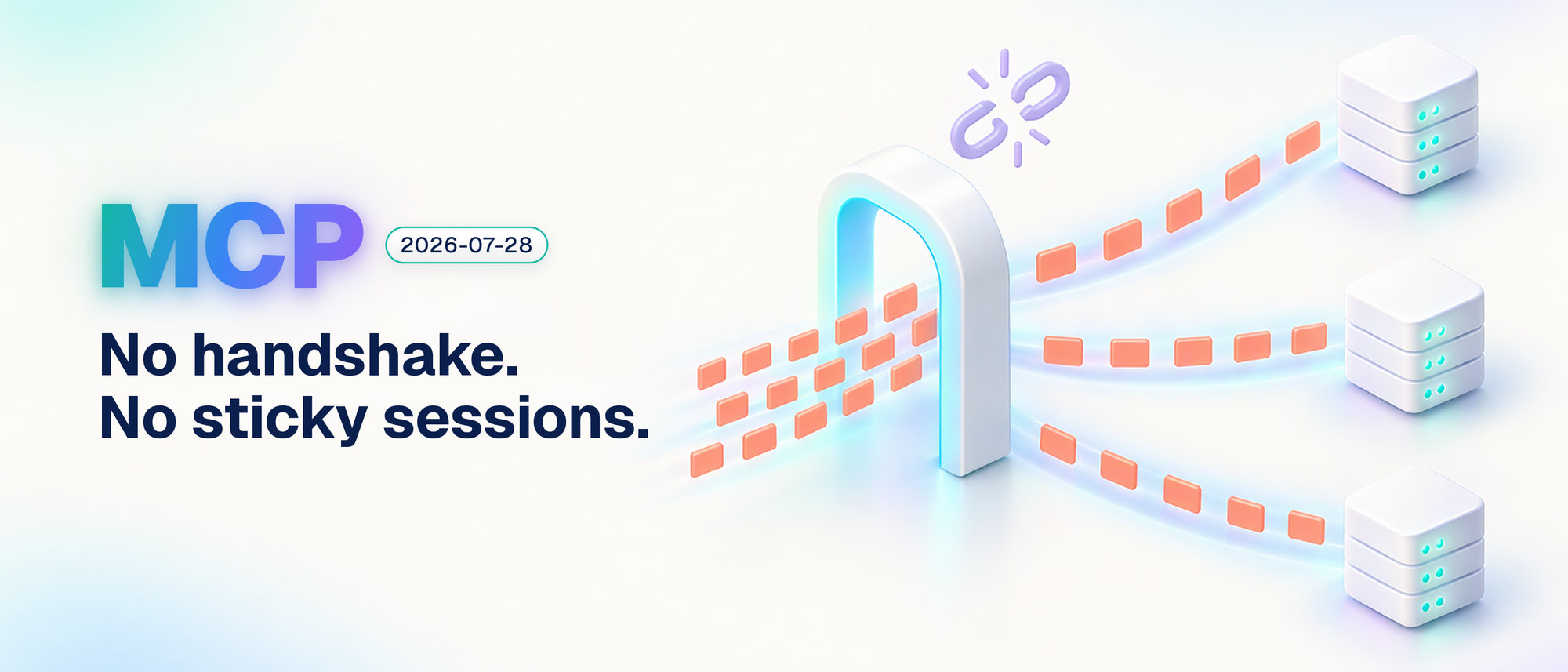
MCP 2026-07-28 removes the
initializehandshake and protocol-level sessions, so each request can reach any server replica. For Azure gateways, the useful part is routing and rate limiting per tool from validated headers, without parsing JSON bodies.Keep application state explicit, protect retry state and check streaming and tracing before removing affinity. Azure’s dedicated AI Gateway is still a preview, and its October resource change matters if you’re planning a pilot.
Running a remote MCP server behind a load balancer used to come with an awkward question: which instance remembers this client? If the server issued an Mcp-Session-Id and kept its session in memory, you needed affinity, shared storage or a deployment small enough to avoid the problem.
The 28 July specification release changes that model. Every request describes itself. A tool call no longer needs a handshake before it can do useful work, and the next call doesn’t have to find the same process.
I spend a lot of my time in the layer between agents and the things they call. From there, the interesting question isn’t just what changed in MCP. It’s what we can simplify in the gateway, what we can finally do per tool, and which responsibilities haven’t gone away.
In a hurry? Jump to the gateway checklist or the eight checks before go-live.
Updated 4 November 2026: the SDK sign-in guidance and AI Gateway migration notes below reflect documentation checked on that date.