Azure AI Gateway became generally available on 17 November 2026 as its own resource type, Microsoft.ApiManagement/aigateways, in 17 regions including Australia East but not New Zealand North. Paid billing starts on 1 January 2027, and resources created in the old AI Gateway tier of API Management keep working only until 15 January 2027.
Model Router, Private Link, VNet integration, Agent Hooks and tool threat protection are still preview, and API Management workspaces still don't support MCP servers. See the GA announcement and migration guidance for the details.
TL;DR
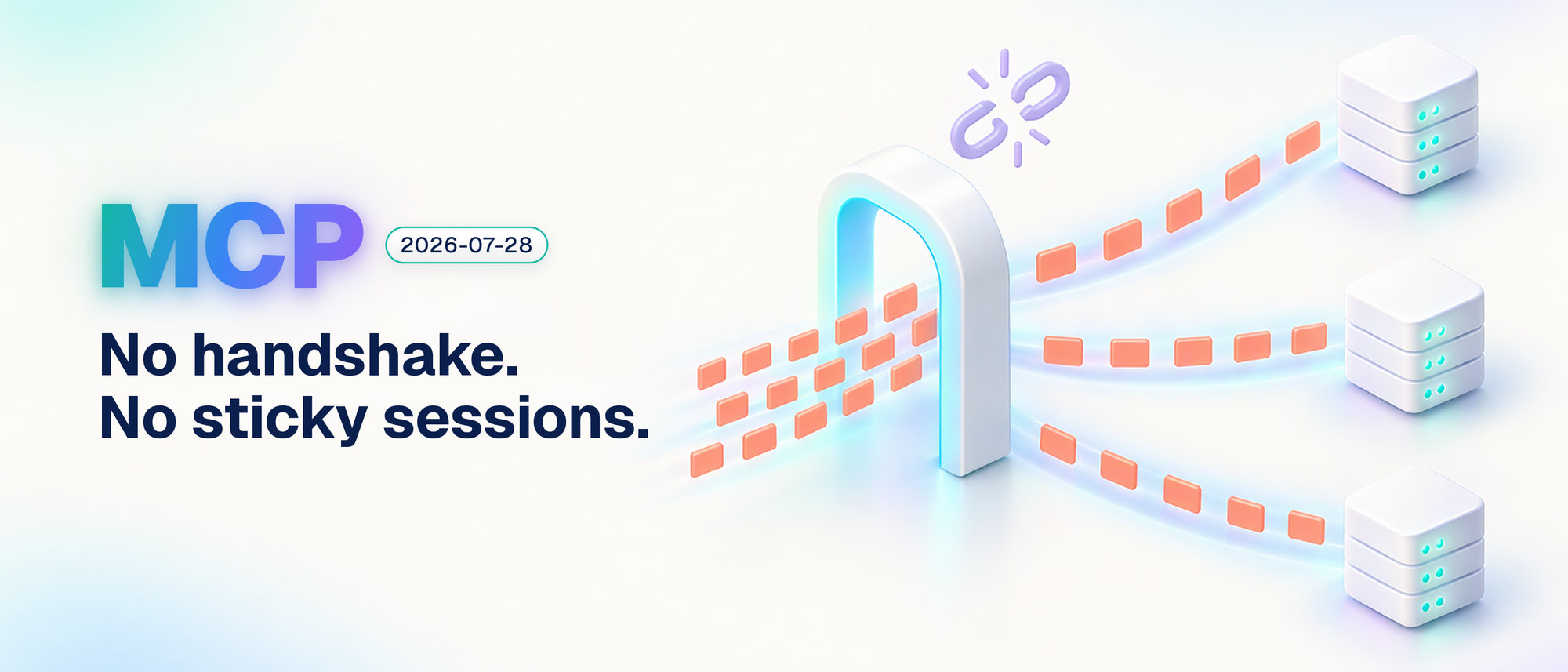
MCP 2026-07-28 removes the initialize handshake and protocol-level sessions, so each request can reach any server replica. For Azure gateways, the useful part is routing and rate limiting per tool from validated headers, without parsing JSON bodies.
Keep application state explicit, protect retry state and check streaming and tracing before removing affinity. Azure’s dedicated AI Gateway reached GA on 17 November 2026; if you piloted the old preview tier, re-create it before 15 January 2027.
Running a remote MCP server behind a load balancer used to come with an awkward question: which instance remembers this client? If the server issued an Mcp-Session-Id and kept its session in memory, you needed affinity, shared storage or a deployment small enough to avoid the problem.
The 28 July specification release changes that model. Every request describes itself. A tool call no longer needs a handshake before it can do useful work, and the next call doesn’t have to find the same process.
I spend a lot of my time in the layer between agents and the things they call. From there, the interesting question isn’t just what changed in MCP. It’s what we can simplify in the gateway, what we can finally do per tool, and which responsibilities haven’t gone away.
In a hurry? Jump to the gateway checklist or the eight checks before go-live.
Updated 23 November 2026: the SDK sign-in guidance and AI Gateway migration notes below reflect the GA service and documentation checked on that date.