AI Agents Exploit Leaked Keys in Minutes: Go Keyless on Azure
TL;DR
A recent threat intelligence report describes an AI agent moving from searching GitHub for application secrets to exfiltrating Azure Key Vault data in five minutes. That’s one observed case, not a typical benchmark.
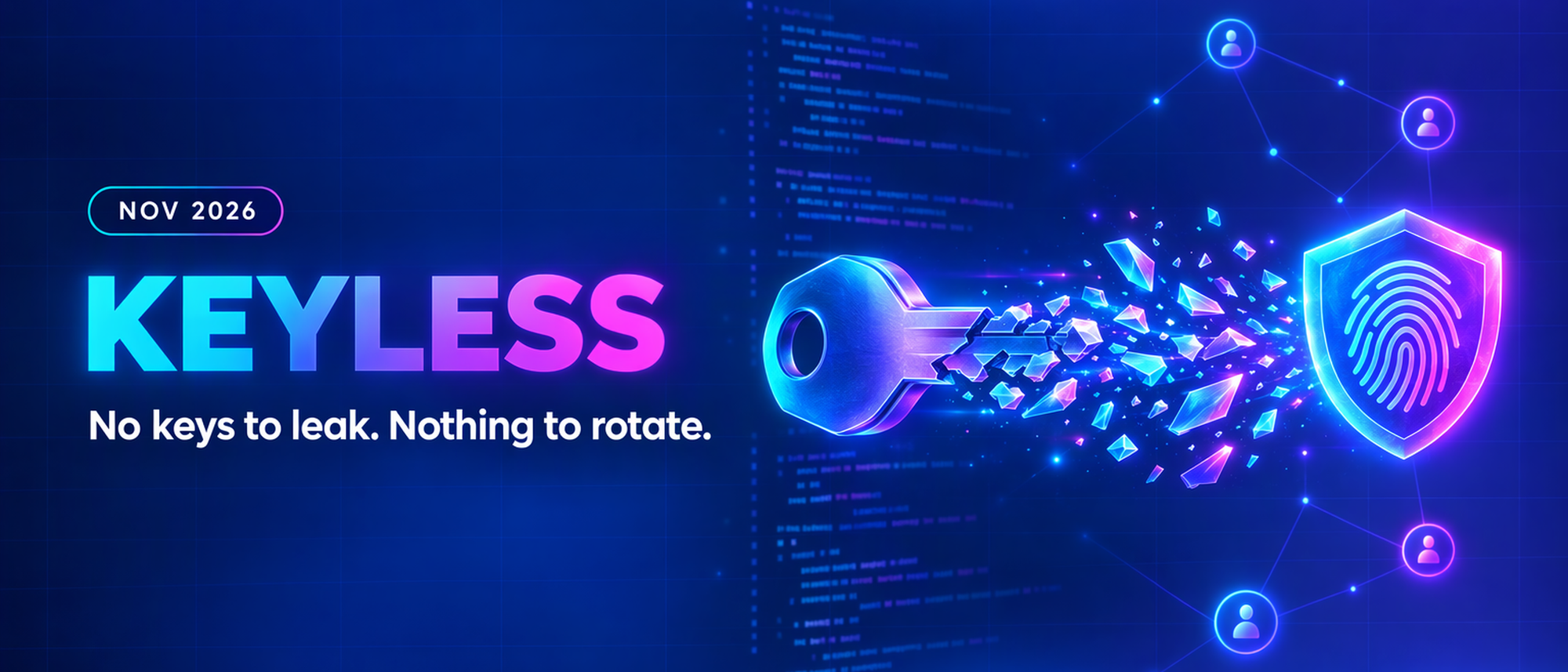
Use managed identities and federation instead of stored credentials, then disable key authentication once callers have migrated. Tokens can still be stolen, so least privilege, monitoring and incident response remain essential.
I spend a lot of my time in the layer between AI agents and the things they call. A model key in an app setting can look like a harmless shortcut during a proof of concept, but the gap between a leak and the response is getting harder to defend.
In a hurry? Jump to the keyless playbook or the nine checks before release, then come back for the threat and the tradeoffs. The product guidance below was checked on 15 November 2026.
What the threat intelligence report found
On 5 November, Microsoft Threat Intelligence reported that threat actors were using agentic tooling to search public GitHub repositories for exposed credentials, including application secrets and AI inference API keys. The agents analysed the results and carried out follow-on actions with little human intervention.
A stolen model key can fund someone else’s inference, while an exposed application secret can open whatever its identity is permitted to reach.